
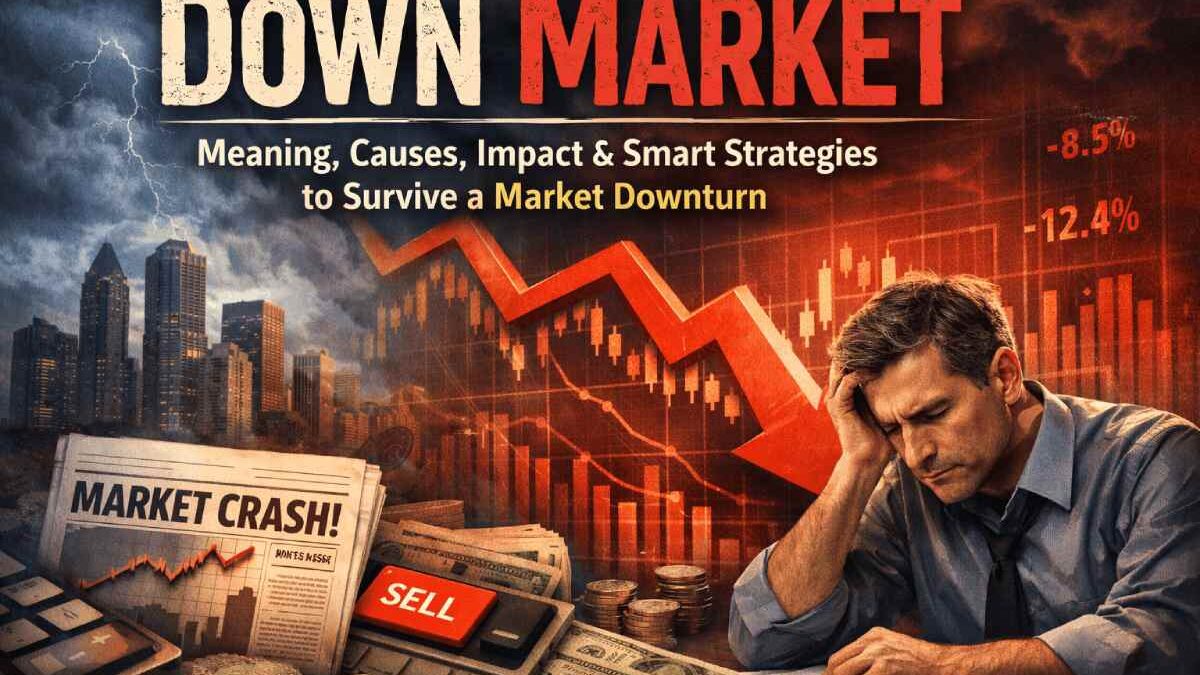

In financial markets, the term down market refers to a prolonged period in which asset prices — especially stocks — are consistently declining due to weak investor confidence, economic slowdown, or structural disruptions in the economy. This phase is also commonly referred to as a bear market, where major indices fall by 20% or more from recent highs over a sustained period. Financial authorities generally define a bear market as a sustained decline of 20% or more from recent highs accompanied by negative investor sentiment: bear market definition explained.
A down market is not just about stock price decline — it reflects deeper macroeconomic stress such as reduced consumer spending, shrinking corporate earnings, rising unemployment, and tighter liquidity in financial systems.
Understanding how a down market works is essential for investors, traders, and even businesses looking to make informed decisions during economic volatility.
Table of Contents
What is a Down Market?
A down market occurs when the overall financial market experiences:
- Persistent decline in stock prices
- Increased volatility
- Negative investor sentiment
- Reduced trading activity
- Capital movement toward safe-haven assets like bonds or gold
Typically, such market conditions emerge due to economic slowdowns, geopolitical instability, financial crises, or unexpected global events like pandemics.
Market Decline Classification
| Market Phase | Percentage Decline | Duration | Investor Sentiment |
| Pullback | 5% – 9% | Days – Weeks | Mild concern |
| Correction | 10% – 19% | Weeks – Months | Moderate fear |
| Bear Market (Down Market) | 20%+ | Months – Years | Extreme pessimism |
These classifications help analysts understand whether a downturn is temporary or a sign of broader economic instability.
Major Causes of a Down Market
Several economic and financial factors contribute to a market downturn:
1. Global Economic Slowdown
When major economies like the U.S., China, or the EU slow down, it affects international trade and foreign investments, which can drag emerging markets like India into a bearish phase.
For instance, the 2008 Global Financial Crisis caused the Indian Sensex to fall by nearly 60% as foreign investors exited emerging markets.
2. Foreign Institutional Investor (FII) Outflows
FIIs play a significant role in liquidity generation in developing markets.
- In 2022, FIIs withdrew over ₹1.5 lakh crore from Indian markets
- This led to a 10% drop in the Nifty 50 within months
Such capital outflows rapidly reduce market confidence and valuations.
3. Geopolitical Conflicts
Events such as:
- Wars
- Trade tensions
- Oil crises
Create uncertainty and inflationary pressure.
Example:
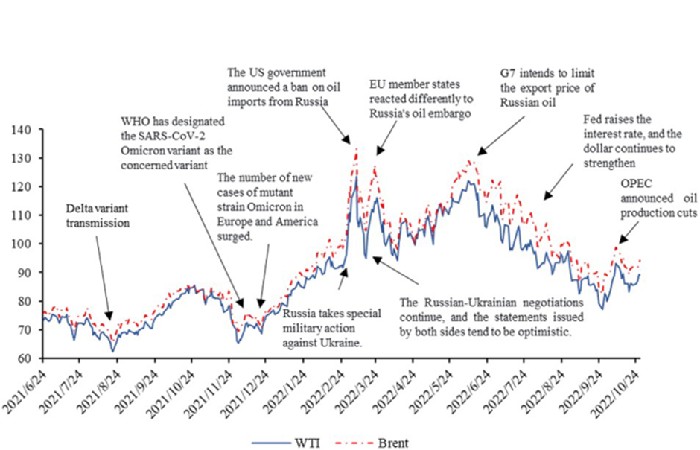
The Russia-Ukraine conflict in 2022 increased global crude oil prices, raising inflation in oil-importing countries like India — triggering bearish trends across equities.
4. Corporate Scandals or Market Manipulation
Frauds such as:
- Accounting scandals
- Financial misreporting
- Insider trading
Can destroy investor trust.
Example:
The Satyam Scam (2009) wiped out billions in investor wealth, causing panic selling across markets.
Historical Examples of Down Markets
| Down Market Period | Cause | Index Decline |
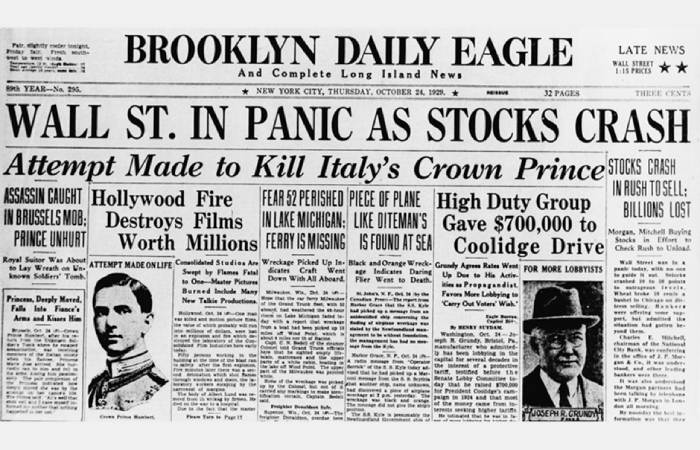
| Great Depression (1929–32) | Banking collapse | Dow fell ~90% |
| Oil Crisis (1973–74) | Oil embargo | Global indices lost 34%+ |
| Dot-com Bubble (2000–02) | Tech overvaluation | NASDAQ fell ~78% |
| Financial Crisis (2007–09) | Housing bubble | S&P 500 fell 50%+ |
| COVID-19 Crash (2020) | Pandemic | Rapid global decline |
| Inflation Bear Market (2022) | Rate hikes | Prolonged selloff |
Each of these downturns had unique triggers but resulted in widespread wealth erosion and economic slowdown.
Impact of a Down Market on Investors
A prolonged down market affects different asset classes in different ways:
Price Performance Comparison Table
| Asset Class | Bull Market Avg Return | Down Market Avg Return |
| Stocks | +12% to +18% | -20% to -45% |
| Bonds | +4% to +6% | +2% to +5% |
| Gold | +2% to +4% | +8% to +15% |
| Real Estate | +6% to +10% | -10% to -25% |
| Cash | +1% to +2% | Stable |
During bearish phases, investors shift funds from equities to safer instruments — a phenomenon known as flight to safety. Regulatory investor education resources note that falling markets typically involve pessimistic sentiment and movement toward safer assets such as bonds or cash: Investor.gov bear market overview.
Common Psychological Reactions
- Panic selling
- Herd mentality
- Risk aversion
- Loss aversion bias
Panic selling often leads to large-scale liquidation of securities at reduced prices due to emotional decision-making rather than fundamentals.
Phases of a Down Market Cycle
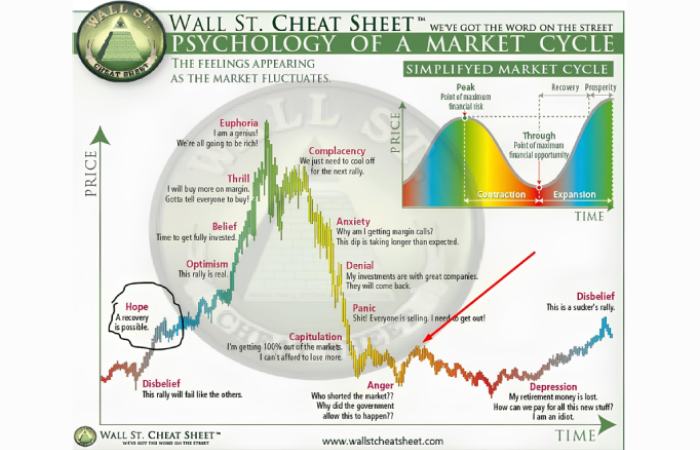
A typical down market progresses through four stages:
| Phase | Description |
| Distribution | Smart money begins selling |
| Panic | Retail investors rush to exit |
| Capitulation | Maximum selling pressure |
| Recovery | Value investors enter |
Sometimes, markets show temporary upward movement during declines known as a dead cat bounce — a short-lived recovery in a falling trend.
Strategies to Survive a Down Market
Investors can still protect or grow wealth during downturns by applying disciplined approaches:
Portfolio Management Techniques
- Diversification across asset classes
- Rebalancing investment portfolios
- Investing in defensive sectors
- Holding cash reserves
- Value investing in fundamentally strong companies
Experts often advise against panic selling during downturns, as it locks in losses and prevents participation in eventual recovery cycles.
Defensive Sectors That Perform Better
| Sector | Reason |
| Healthcare | Constant demand |
| Utilities | Essential services |
| Consumer Staples | Daily-use products |
| Gold Mining | Hedge against inflation |
Long-Term Opportunities in a Down Market
While downturns appear risky, they often present:
- Undervalued stock buying opportunities
- Higher dividend yields
- Improved long-term ROI potential
Market history shows that disciplined investors who maintain diversified portfolios and long-term strategies tend to benefit when markets rebound.
Conclusion
A down market is an inevitable phase in the financial cycle that reflects declining economic confidence and reduced asset valuations. Although it may lead to short-term losses, it also opens strategic entry points for long-term investors.
Understanding:
- Market decline classifications
- Economic triggers
- Investor psychology
- Portfolio management strategies
Can significantly improve financial decision-making during bearish phases.
Rather than reacting emotionally, adopting data-driven investment strategies during downturns allows investors to navigate volatility efficiently and prepare for future market recoveries.