
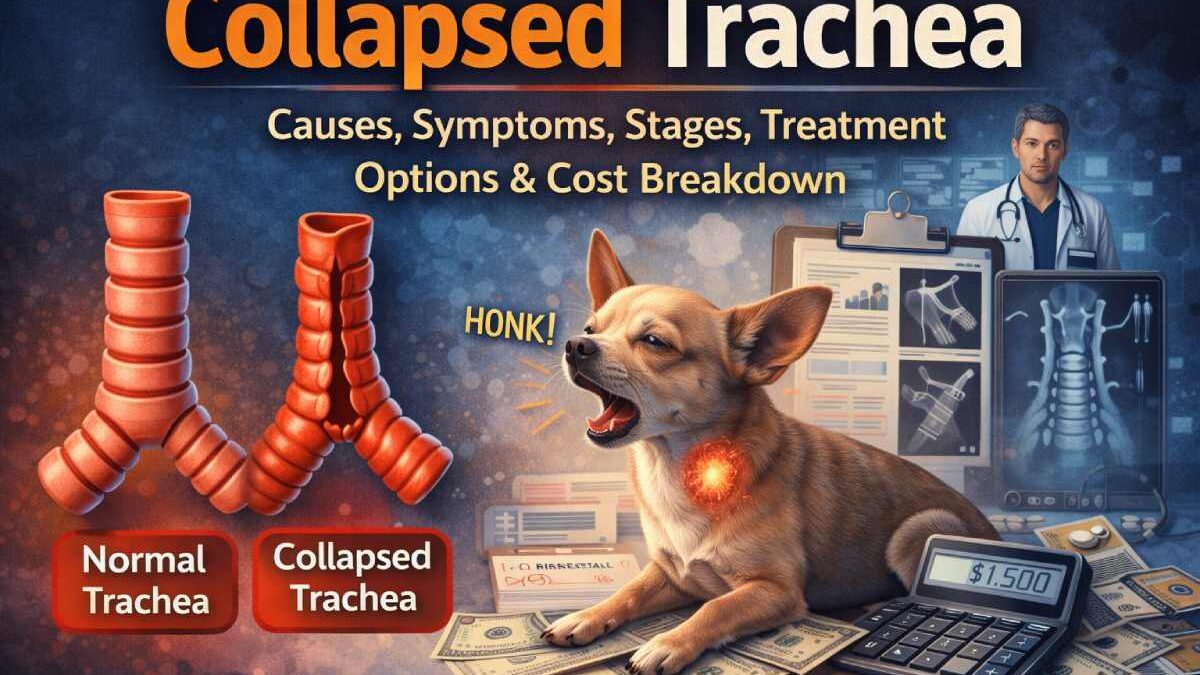
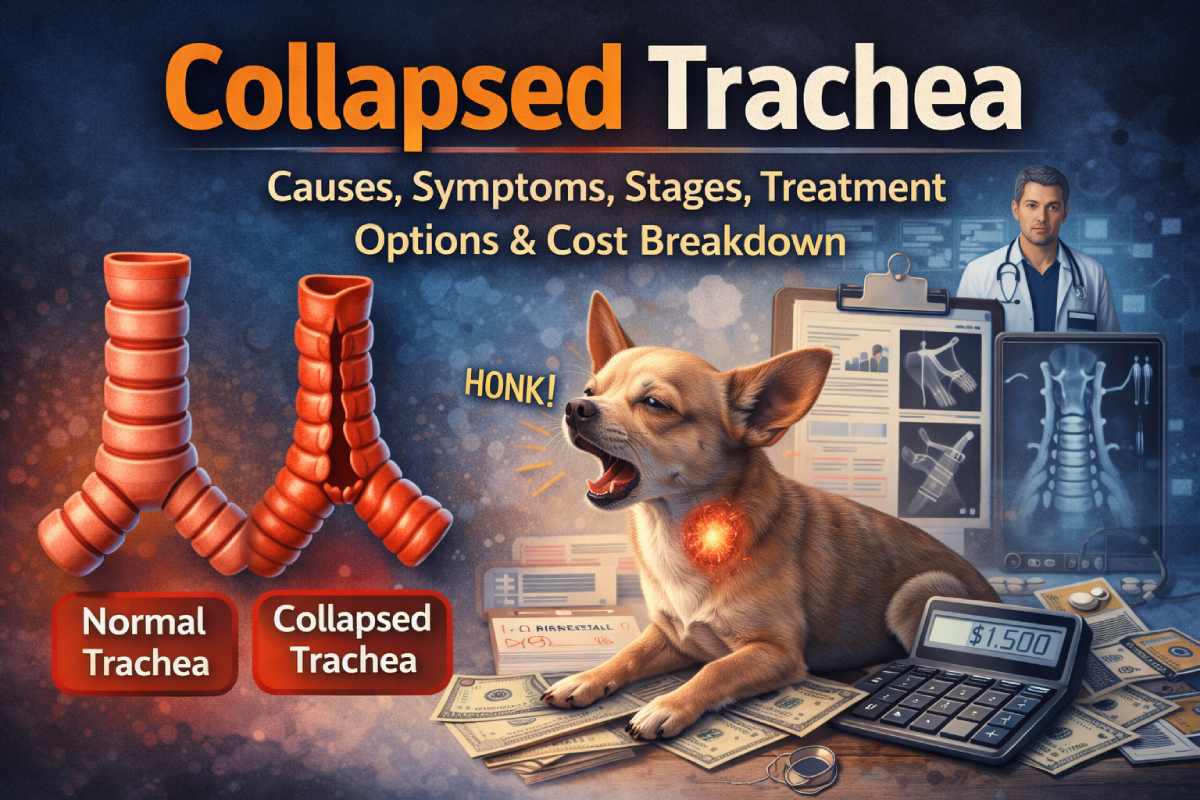
A collapsed trachea—medically known as tracheal collapse—is a progressive respiratory condition in which the windpipe (trachea) weakens and partially flattens, restricting airflow. Veterinary specialists describe tracheal collapse as a progressive disease caused by weakening cartilage rings that flatten and narrow the airway, leading to chronic coughing and breathing difficulty: Cornell University Veterinary Medical Center — Tracheal Collapse Overview. It is most commonly diagnosed in small dog breeds, though it can also occur in cats and, rarely, in humans.
Because respiratory symptoms often resemble other conditions such as kennel cough, bronchitis, or heart disease, tracheal collapse is frequently misdiagnosed in early stages. Understanding the anatomy, progression, treatment options, and cost implications is essential for pet owners and caregivers seeking accurate, actionable information.
Table of Contents
What Is a Collapsed Trachea?
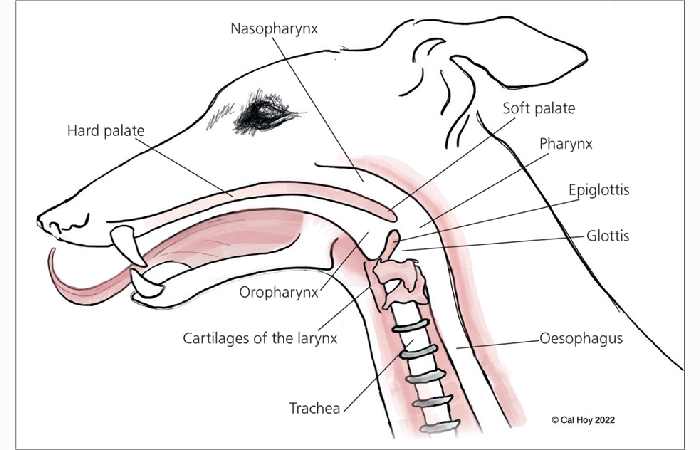
The trachea is a flexible tube composed of C-shaped cartilage rings that maintain an open airway from the larynx to the bronchi. In tracheal collapse:
- The cartilage rings weaken or deform.
- The dorsal tracheal membrane sags.
- The airway narrows, especially during inhalation or exhalation.
This narrowing reduces oxygen flow and produces the characteristic “goose honk” cough seen in affected dogs.
Why Does Tracheal Collapse Happen?
Tracheal collapse can be:
- Congenital – Structural weakness present from birth.
- Acquired – Progressive weakening over time due to environmental or physiological stressors.
Primary Causes and Risk Factors
| Category | Risk Factor | Mechanism |
| Genetic | Small toy breeds | Inherently weaker cartilage rings |
| Obesity | Excess weight | Increased respiratory effort |
| Chronic airway irritation | Smoke, pollution | Inflammation weakens tissue |
| Cardiac disease | Enlarged heart | Pressure on airway |
| Collar use | Neck strain | Repeated mechanical stress |
| Age | Middle-aged to senior dogs | Cartilage degeneration |
Breeds Most Commonly Affected
Although any dog can develop this condition, it is most frequently diagnosed in:
- Yorkshire Terriers
- Pomeranians
- Chihuahuas
- Toy Poodles
- Maltese
- Shih Tzus
These breeds have a genetic predisposition toward weaker tracheal cartilage.
Symptoms of a Collapsed Trachea
Symptoms range from mild coughing to severe respiratory distress.
Early Symptoms
- Dry, honking cough
- Cough triggered by excitement
- Cough when pressure is applied to the neck
- Exercise intolerance
Advanced Symptoms
- Wheezing
- Labored breathing
- Cyanosis (blue-tinged gums)
- Fainting episodes
- Chronic bronchitis
Symptom Severity Overview
| Stage | Airway Narrowing | Common Signs |
| Grade 1 | 25% collapse | Occasional cough |
| Grade 2 | 50% collapse | Frequent honking cough |
| Grade 3 | 75% collapse | Respiratory difficulty |
| Grade 4 | Near complete | Severe distress, emergency |
How Is It Diagnosed?
Diagnosis requires veterinary imaging and clinical examination.
Diagnostic Tools
- Physical examination
- Chest X-rays
- Fluoroscopy (dynamic imaging)
- Endoscopy
- Blood work
- Cardiac evaluation (to rule out heart disease)
Fluoroscopy and endoscopy provide the most accurate grading of airway collapse.
Stages of Tracheal Collapse Explained
The disease progresses gradually.
1 Grade (Mild)
- Slight dorsal membrane sagging
- Symptoms manageable with lifestyle changes
2 Grade (Moderate)
- Noticeable airway narrowing
- Cough more frequent
3 Grade (Severe)
- Cartilage rings flatten significantly
- Breathing difficulty evident
4 Grade (Critical)
- Almost total airway obstruction
- Surgical intervention often required
Treatment Options for Collapsed Trachea
Treatment depends on severity. Veterinary treatment guidelines emphasize medical management first, including cough suppressants, anti-inflammatory medication, weight control, and environmental modification before considering surgery: MSD Veterinary Manual — Tracheal Collapse in Dogs.
1. Medical Management (Most Common)
Best for Grades 1–2.
Medications include:
- Cough suppressants (Hydrocodone, Butorphanol)
- Bronchodilators
- Corticosteroids
- Anti-anxiety medications
- Antibiotics (if infection present)
Lifestyle adjustments:
- Weight loss
- Harness instead of collar
- Humidified air
- Avoid smoke exposure
Surgical Treatment (Advanced Cases)
For Grade 3–4 cases unresponsive to medication.
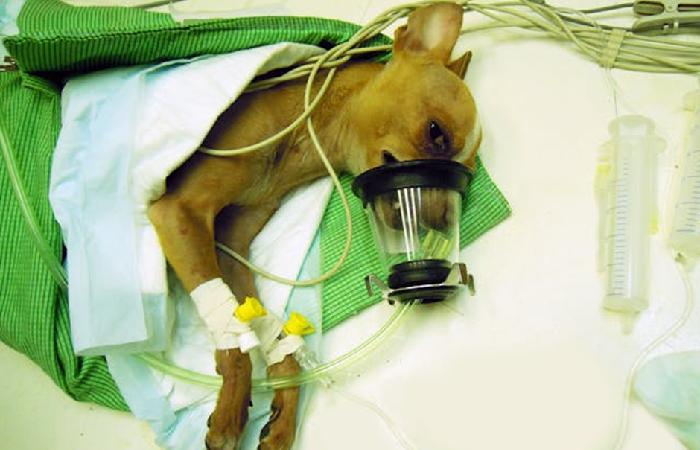
Surgical options:
- External prosthetic rings
- Intraluminal tracheal stents
Surgery improves quality of life but carries risks including:
- Stent migration
- Infection
- Granulation tissue formation
Cost Breakdown: Medical vs Surgical Management
Understanding cost implications is crucial for planning.
Average Cost Comparison (USA Estimates)
| Treatment Type | Initial Cost | Long-Term Cost | Notes |
| Medical Management | $300–$1,000 | $500–$2,000 annually | Ongoing medication |
| Diagnostic Testing | $500–$1,500 | — | Imaging + labs |
| Tracheal Stent Surgery | $3,000–$6,000 | $500–$1,000 follow-up | Specialist required |
| Emergency Care | $800–$2,500 | — | Oxygen + stabilization |
Cost Distribution (Approximate Percentage)
- Diagnostics: 20%
- Medications: 25%
- Surgery: 45%
- Follow-up Care: 10%
This breakdown illustrates why early detection significantly reduces financial burden.
Home Care and Lifestyle Management
Management plays a vital role in disease control.
Daily Care Checklist
- Use a harness (never a collar)
- Maintain ideal weight
- Avoid extreme temperatures
- Limit overexcitement
- Keep air clean and humidified
- Administer medication consistently
Diet and Weight Control
Obesity worsens symptoms by increasing respiratory workload. A veterinarian-guided weight management plan improves outcomes.
Emergency Signs: When to Seek Immediate Care
Seek urgent veterinary care if your dog shows:
- Rapid breathing (>40 breaths per minute at rest)
- Blue or pale gums
- Collapse or fainting
- Continuous distress
These signs may indicate critical airway obstruction.
Can a Dog Live a Normal Life With a Collapsed Trachea?
Yes—many dogs live comfortably for years with proper management.
Prognosis by Grade
| Grade | Prognosis |
| Grade 1 | Excellent |
| Grade 2 | Very good with treatment |
| Grade 3 | Guarded |
| Grade 4 | Depends on surgical success |
Early intervention significantly improves long-term outcomes.
Collapsed Trachea vs Kennel Cough
Misdiagnosis is common.
| Feature | Collapsed Trachea | Kennel Cough |
| Cough Type | Honking | Harsh, hacking |
| Duration | Chronic | 1–3 weeks |
| Fever | Rare | Sometimes present |
| Contagious | No | Yes |
| Breed Specific | Yes | No |
If coughing persists beyond two weeks, further evaluation is necessary.
Prevention Strategies
While genetic cases cannot be fully prevented, risk can be minimized.
Preventive Measures
- Avoid neck pressure
- Maintain a healthy weight
- Avoid second-hand smoke
- Regular vet checkups
- Prompt treatment of respiratory infections
Frequently Asked Questions (FAQs)
Is tracheal collapse painful?
It is primarily uncomfortable rather than painful, though severe cases may cause distress.
Can it be cured?
There is no permanent cure. Management focuses on symptom control.
Is surgery always necessary?
No. Most dogs are managed medically.
How long can dogs live with this condition?
With proper care, many live 5–10 years post-diagnosis.
Key Statistics Summary
| Metric | Data |
| Most affected age | 6–8 years |
| Most affected size | <15 lbs |
| Surgical success rate | 70–85% improvement |
| Medical management success | ~75% symptom control |
Final Thoughts
Collapsed trachea is a progressive but manageable condition. Early diagnosis, consistent management, and informed financial planning significantly improve quality of life. While severe cases may require surgical intervention, most dogs respond well to medical therapy and lifestyle adjustments.
Pet owners should monitor coughing patterns, maintain a healthy weight, and work closely with a veterinarian to tailor treatment plans.
Proactive management transforms what appears to be a frightening diagnosis into a controllable long-term condition.