
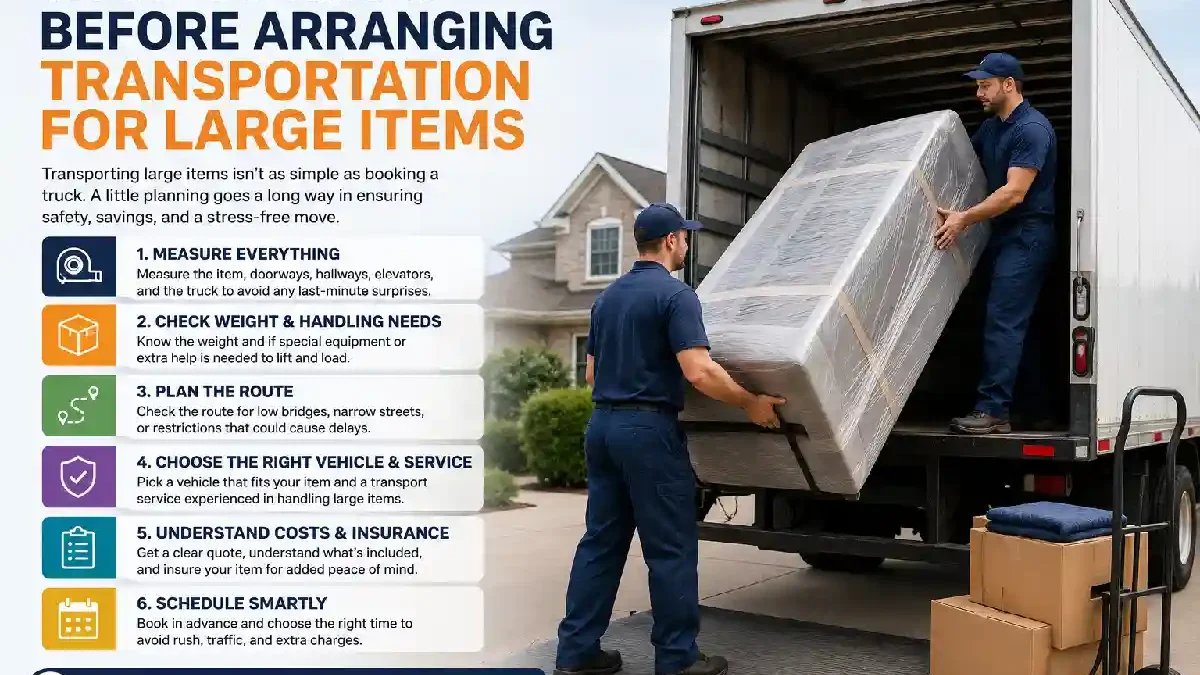
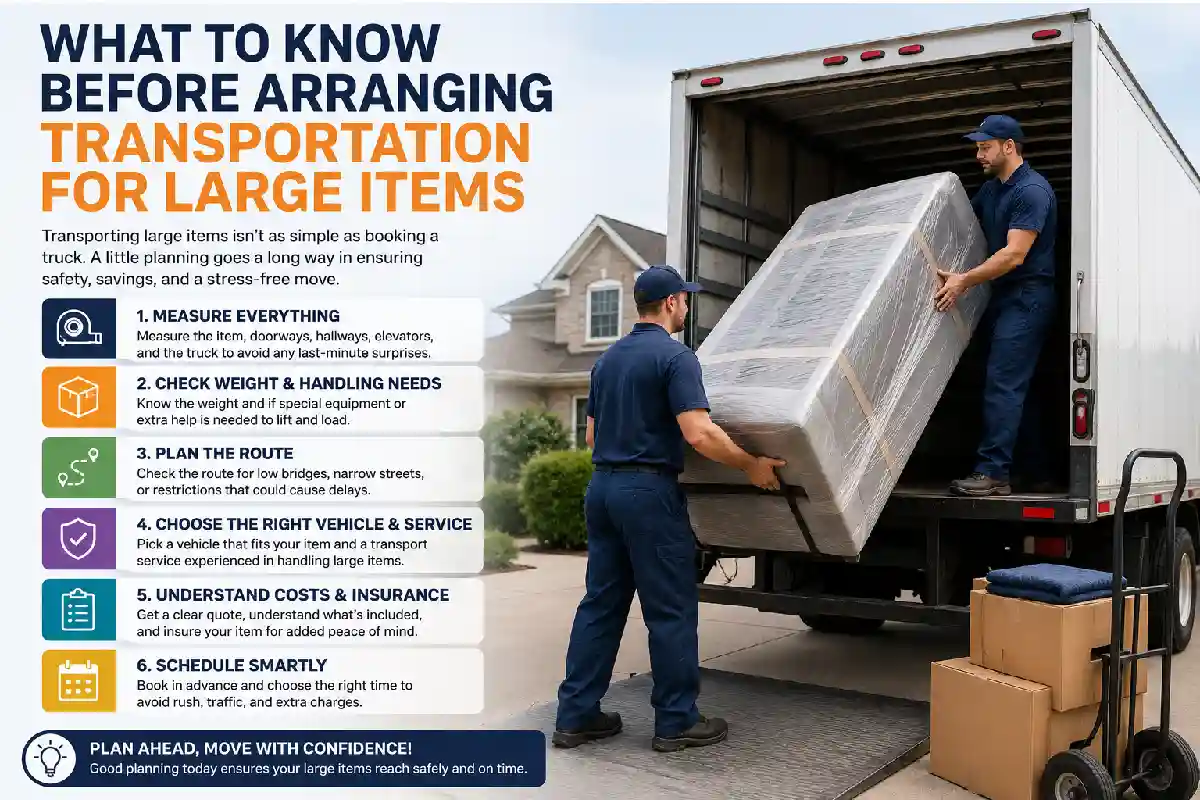
What to Know Before Arranging Transportation for Large Items – Transporting a large item can be more complicated than arranging an everyday parcel delivery. Furniture, appliances, machinery, exercise equipment and other bulky possessions may require extra space, careful handling and suitable equipment. A little preparation before arranging transportation can help prevent delays, unexpected costs and damage.
Table of Contents
Measure the Item Carefully
Start by recording the item’s dimensions and approximate weight. Measure its height, width and depth, including any parts that stick out or cannot be removed. Accurate measurements help determine what type of vehicle and loading equipment may be required.
If an item can be dismantled safely, doing so may make transportation easier. Removing table legs, shelving, or detachable components can reduce its overall size while also making individual sections easier to handle.
Consider Access at Both Locations
The item’s dimensions are only part of the equation. Think about how it will leave the collection point and enter its destination. Check doorways, staircases, corridors, lifts, gates and other narrow spaces. For particularly bulky objects, consider whether there is enough room outside for an appropriate vehicle to park and load safely. Identifying access problems beforehand can avoid an unpleasant surprise on moving day.
Choose Transportation That Suits the Item
Different items have different transportation requirements. A sofa may simply need a spacious van and protective coverings, while a piece of heavy machinery could require specialist lifting equipment.
When comparing transport options, provide detailed information about the item and journey. Online services such as www.shiply.com can be useful when looking at ways to arrange transportation for bulky or unusually sized goods. The cheapest option is not automatically the most suitable. Consider the level of service provided, the type of vehicle and whether the transporter has experience handling similar items.
Prepare and Protect the Item
Good preparation can reduce the risk of scratches, dents and other damage. Depending on the object, protection might include sturdy boxes, furniture blankets, corner protectors or suitable wrapping materials. Pay particular attention to fragile components such as glass panels, screens, handles and decorative features. Loose parts should be removed or secured so they cannot move during the journey. For large or heavy loads, proper restraint is also important. Items should not simply be placed inside a vehicle with the expectation that their weight will keep them stationary.
Clarify Loading and Unloading
Before confirming transportation, establish who is responsible for getting the item into and out of the vehicle. Some services may include assistance, while others may expect the sender or recipient to handle loading and unloading. If the object requires two or more people to move safely, make sure sufficient help will be available. Specialist lifting equipment may also be necessary for exceptionally heavy or awkward goods.
Allow Enough Time
Large-item transportation is easier when it is not organized at the last minute. Allowing extra time gives you an opportunity to compare options, prepare the item and resolve access issues. Confirm the collection and delivery details in advance, including addresses, contact information, and any parking or access restrictions. Good communication between everyone involved can make the process considerably smoother.
Plan Before the Journey Begins
Successful transportation of large items starts well before the vehicle arrives. Accurate measurements, appropriate protection, suitable transport, and clear loading arrangements all contribute to a safer and more efficient move. By planning these details early, you can reduce complications and give your item the best chance of reaching its destination in good condition.